
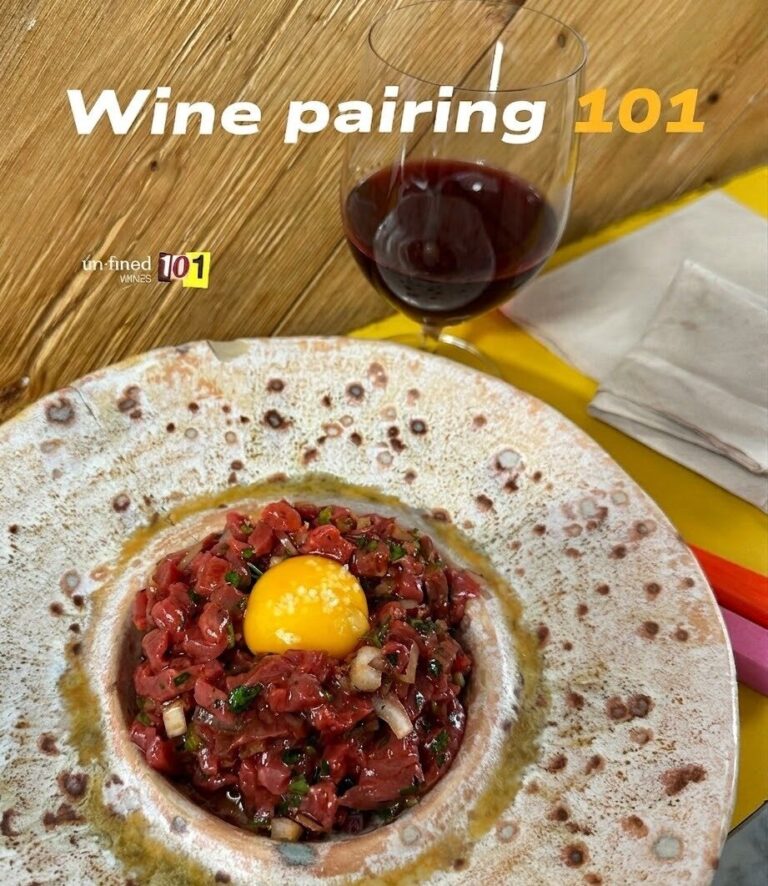
People often ask us how to pair wine with food. There are definitely some guiding rules, but no fixed formula – and that’s part of the fun. We learned the basics the way we do most things: tasting our way through dinners, afternoon snacks and random food encounters. Here are a few lessons that stuck with us:
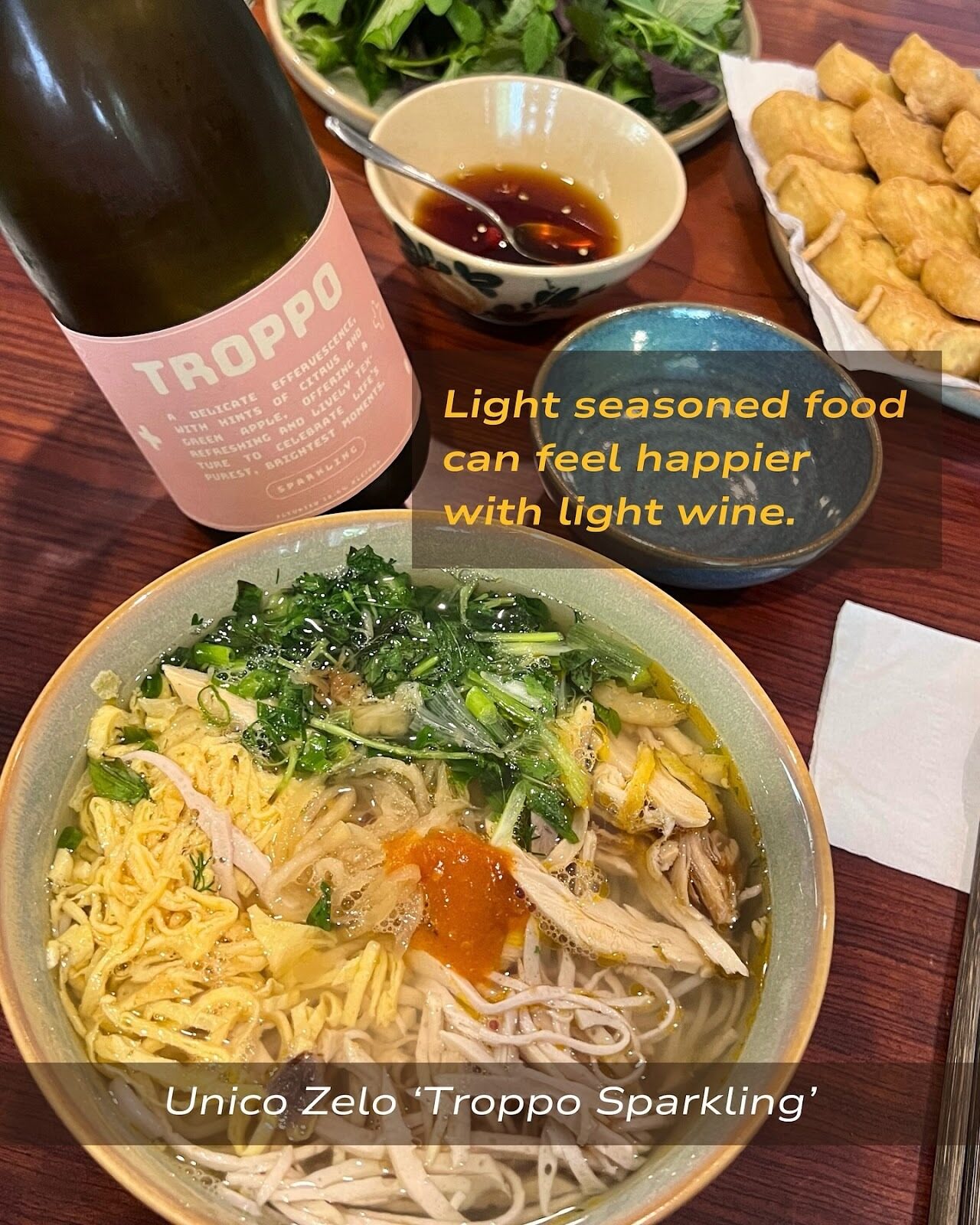
1. Lightly seasoned food can feel happier with light wine
Fresh cheese, poached fish, spring veg – they often click with something crisp and lively.
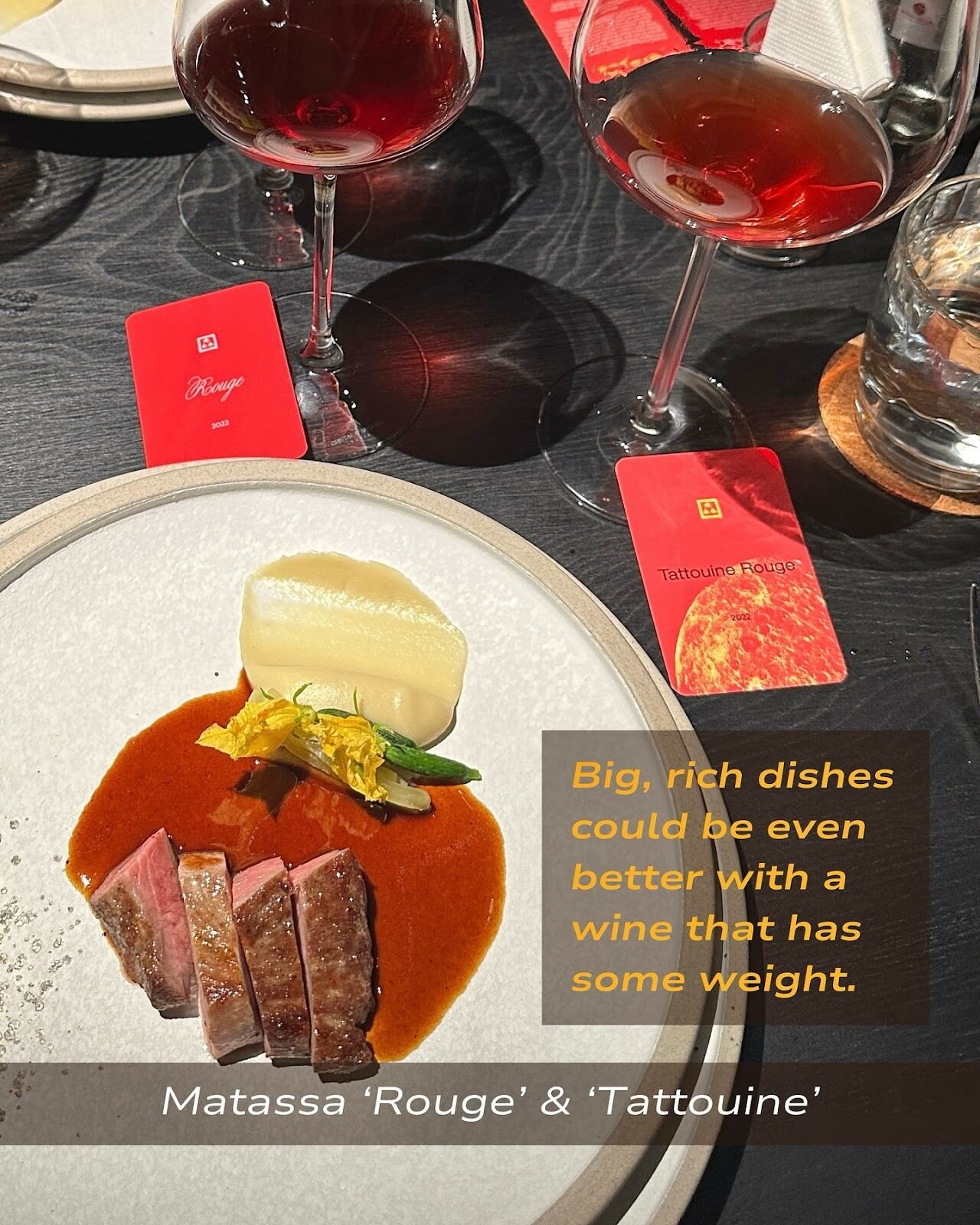
2. Big, rich dishes could be even better with a wine that has some weight to it (but not too much, otherwise the whole meal will be too heavy!)
Slow-cooked beef, stews, roasts – they tend to shine with a bottle that can stand up to them. On that note, sometimes a light fizzy red can bring a pleasant surprise to the table.
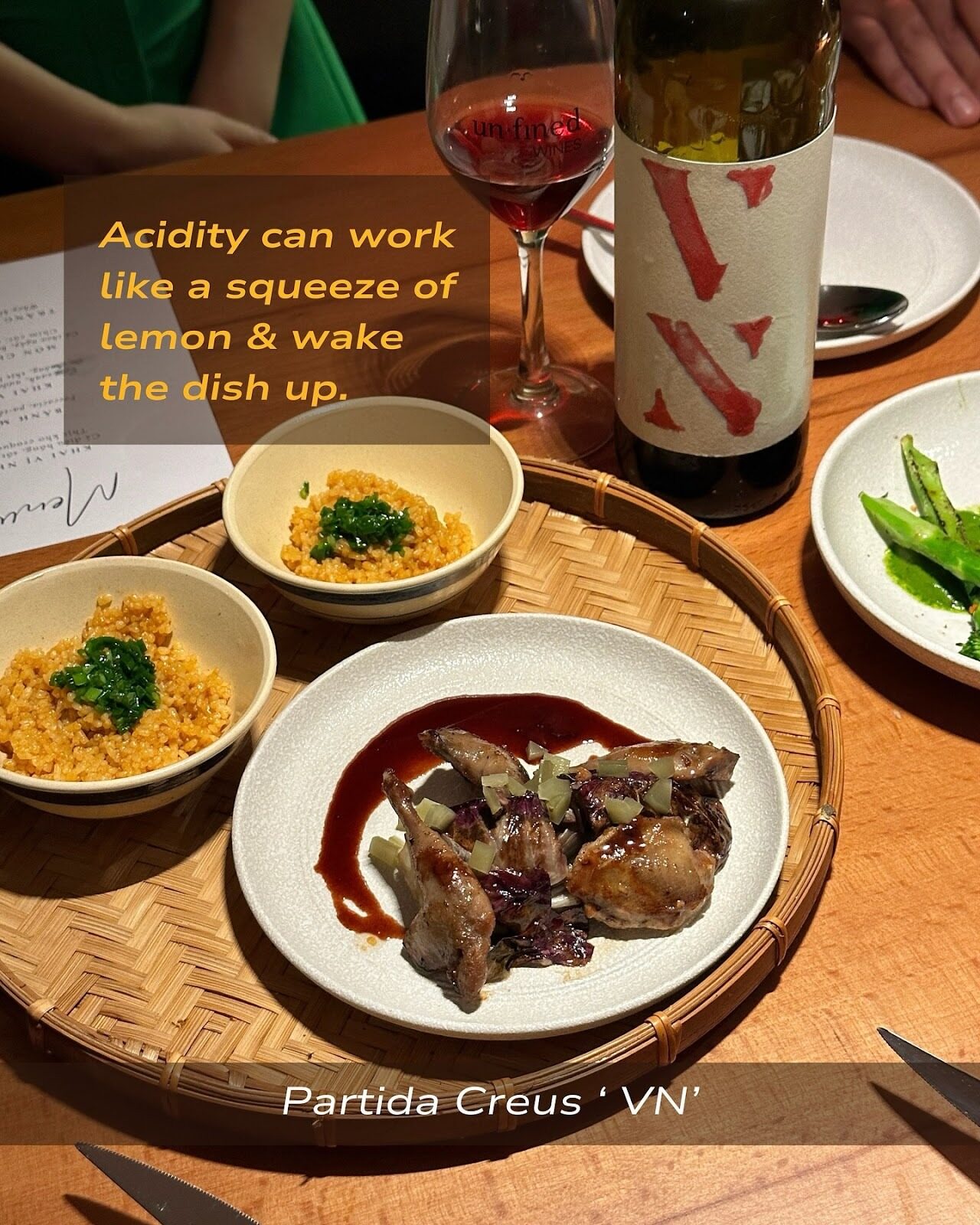
3. Acidity can work like a squeeze of lemon
A bright wine can cut through cream, oil and fat and wake the dish up.
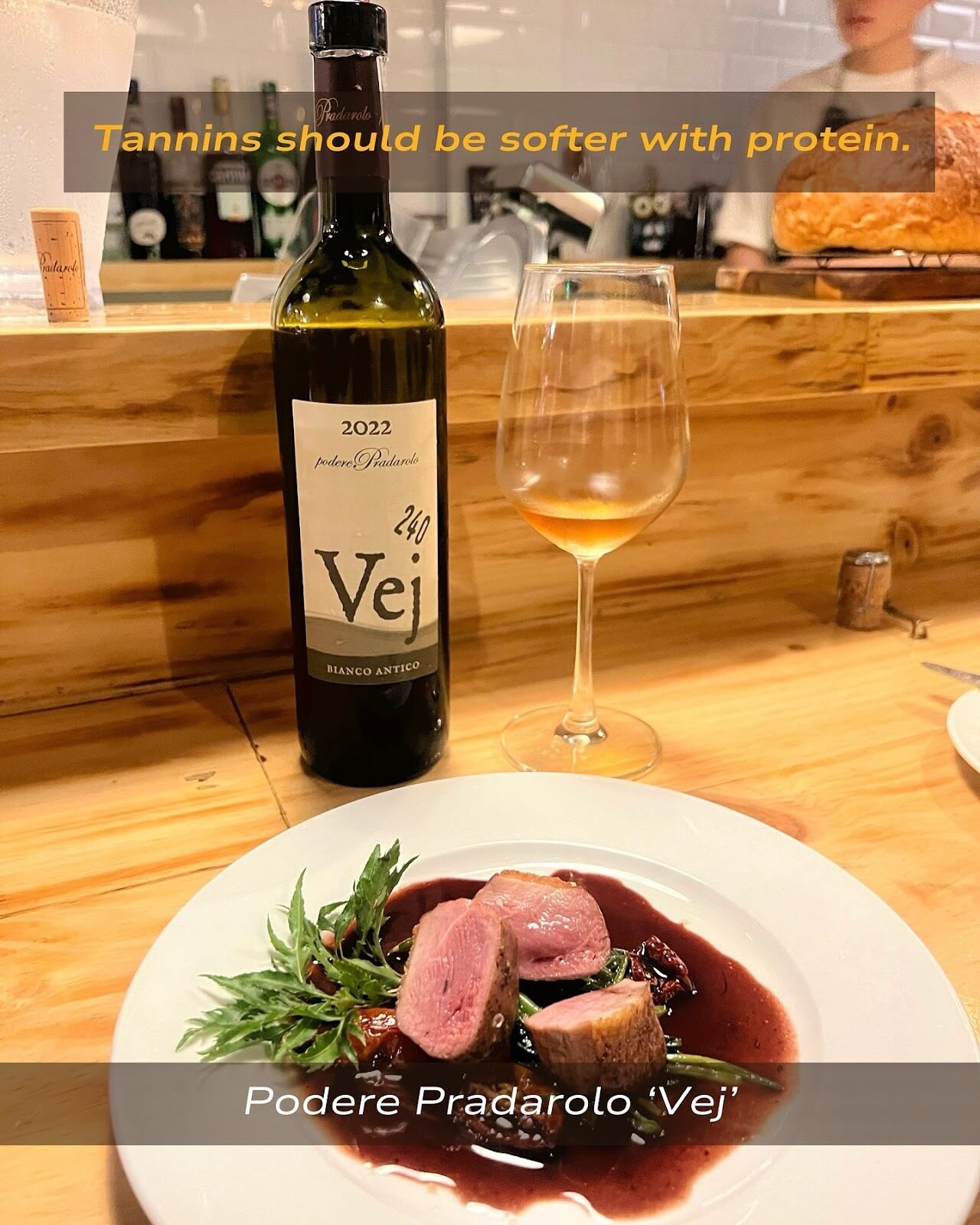
4. Tannins should be softer with protein
Steak, duck, charcuterie – that’s why they often taste so right together.
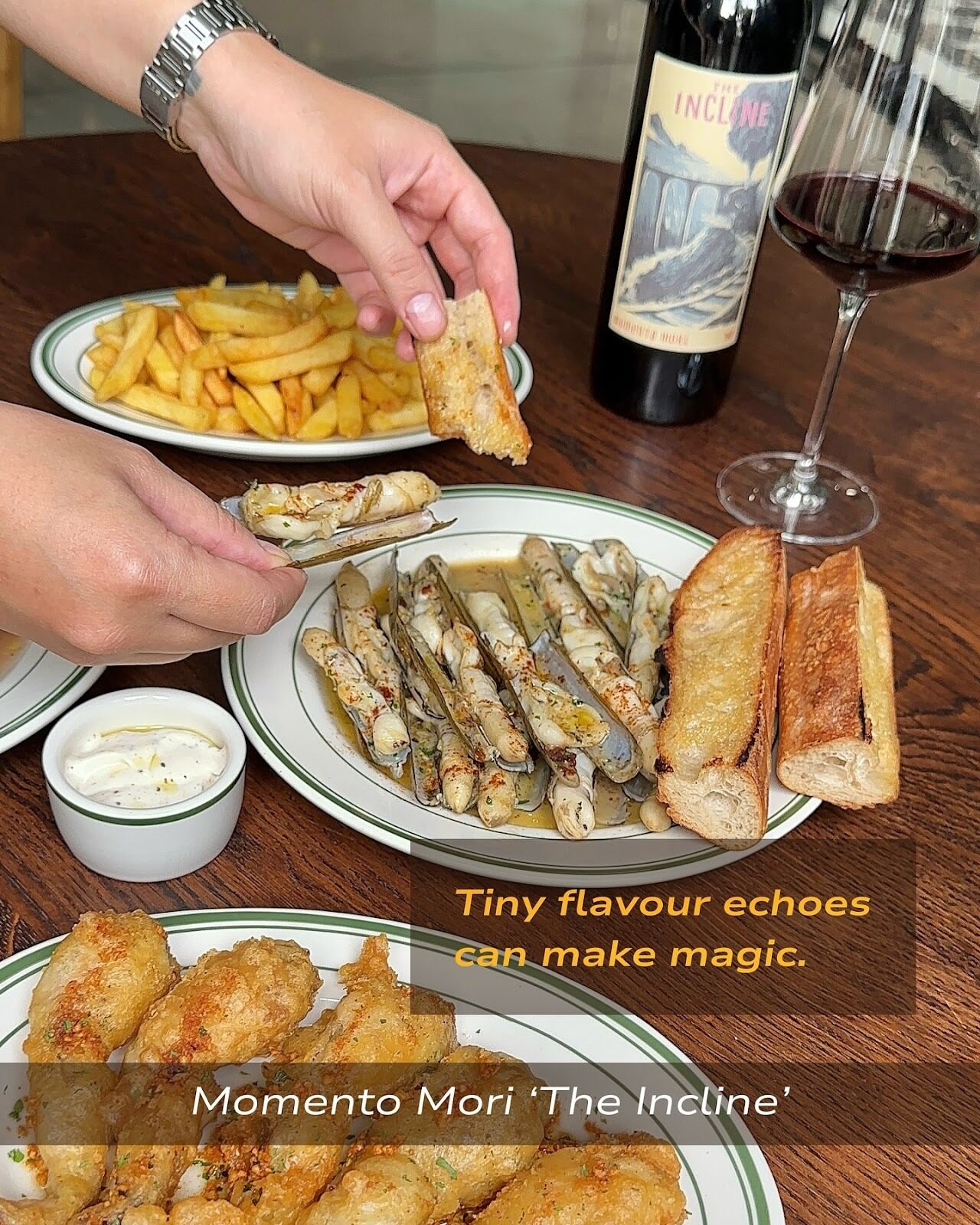
5. Tiny flavour echoes can make magic
Peppered lamb with peppery Syrah, lime zest ceviche with citrusy Pinot Gris. Like harmonies.
And the best part is that the natural wine blows the doors wide open. We’re no longer stuck in the old “big red” or “clean white” lanes. There could be light reds, skinsy/orange whites with texture, pét-nats that carry a spark of wildness,… And for that, it should be some exceptions. Skinsy whites with curry? Can work sometimes. Chilled light red with spicy noodles? Can work too!
Once you’ve got the basics, pairing stops feeling like homework and starts feeling like a road trip. You start taking detours and discovering new views.
Some of our favourite finds lately:
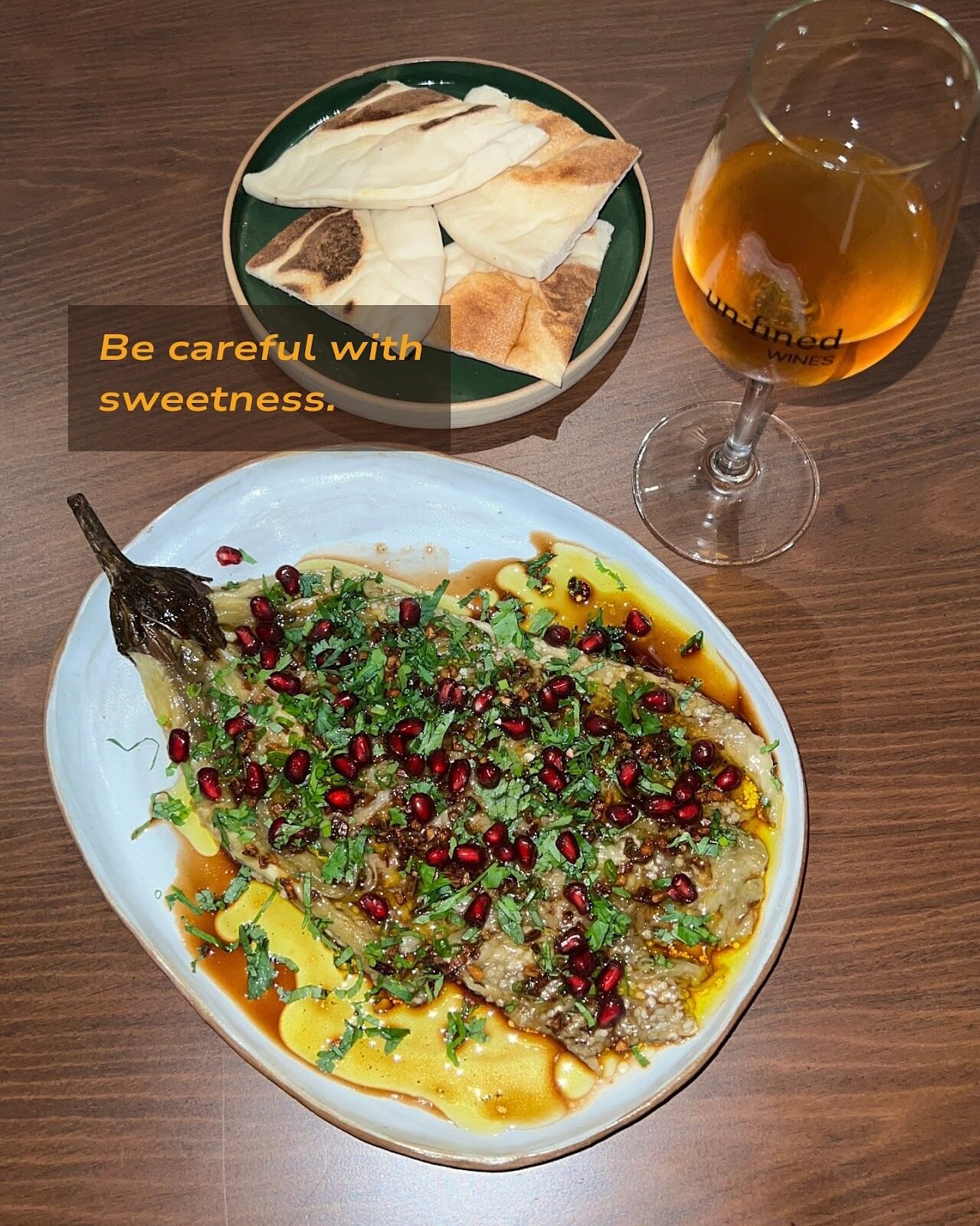
6. Be careful with sweetness
Sweetness doesn’t just mean dessert. It sneaks into savoury dishes too: caramelized onions, berry sauces, sweet fish sauce for bún chả, a sprinkle of sugar in gỏi, or even the lychee & mango that’s tucked into ceviche. All of that sweetness can make the wine taste harsher, bitter, or overly acidic. The trick is to choose wines that naturally have plenty of ripe, juicy fruit and round texture to balance it out. White grapes with skin contact for gentle grip, fruity reds like Grenache or Blaunfrankisch, or wines that carry a little residual sugar to soften the edges. And when dishes tip into stronger sweetness or for dessert itself, that’s when more off-dry and sweet wines join the list.
7. Think about texture as much as flavour
Texture is how a wine feels in your mouth (like creamy, grippy, fizzy, sharp,…) and it can completely change how food tastes. A lightly fizzy pét-nat lifts creamy burrata, a high-acidity white with a crisp edge cuts through fried fish and refreshes your palate, and a red with soft tannin feels like velvet next to roast veg. Matching (or deliberately clashing) textures makes pairings more exciting.

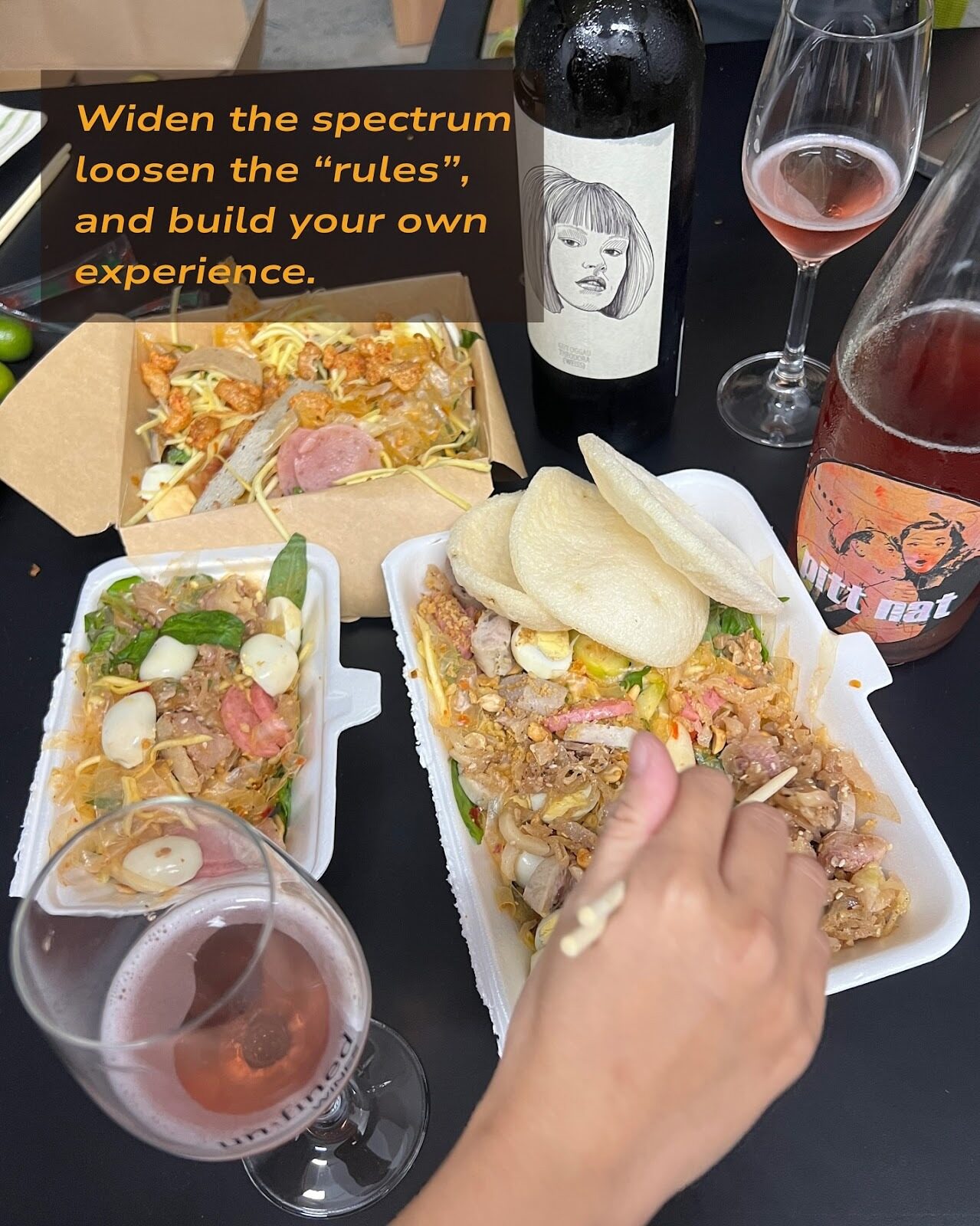
8. Widen the spectrum and loosen the “rules”
Don’t lock yourself into boxes like “red”, “rosé”, “white”. Natural wine opens a huge playground: chillable reds as refreshing as dark rosé, skinsy whites with gentle grip for earthy or spicy dishes, pét-nats slicing through briny, fried or creamy bites, silky vibrant reds gliding from charcuterie to grilled fish. Try, taste, swap glasses and see what happens in your own world.
9. Build on your own experience
We recently learned the hard way that unseasoned lobster with Gewürztraminer is an absolute horrifying disaster. Who says white must go with seafood? Serve them that combo – it’ll change their mind.
And that’s how pairing turns from theory into fun. The tips are on the table, it’s your turn to test them. We’ll catch you in the next 101!